November 4, 2026
For IT newcomers and small operations teams rolling out sensors, cameras, and connected devices across warehouses, clinics, or retail sites, the hardest question shows up fast: where should data be processed and stored. In distributed IT environments, cloud vs edge infrastructure can feel like a tradeoff between data latency concerns, cost management in IT infrastructure, and the daily reality of keeping systems stable. Many teams run into IoT data processing challenges when “send everything to the cloud” meets spotty networks, unpredictable workloads, and tight budgets. Edge computing for beginners starts with making that decision clear enough to support reliable performance.
See an Edge Server Cut Latency for On-Site IoT/AI Workloads
Once you’ve felt how network distance can slow decisions down, it’s easier to see why many teams bring compute and storage right to where data is created. In customer-style deployments, an edge server sits on-prem and processes IoT and AI data locally, so analytics and automated responses don’t have to wait on a round trip to a distant data center. That proximity cuts latency and supports faster, real-time decision-making across distributed systems, especially when you need consistent performance at multiple sites.
When you evaluate edge hardware for modern IoT infrastructure, look for systems built for the conditions where they will actually run. Choose scalable performance, so you can add capacity as workloads grow. Prioritize remote management, so one team can monitor, patch, and troubleshoot many sites without sending someone on site. In dusty or demanding facilities, an industrial edge server with a filtered fan can be the difference between stable uptime and frequent maintenance. Standardizing on one platform across sites also keeps spare parts, training, and support simple.
Understanding Edge vs. Cloud Infrastructure
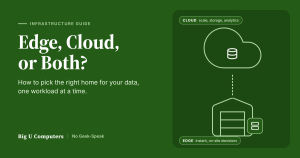
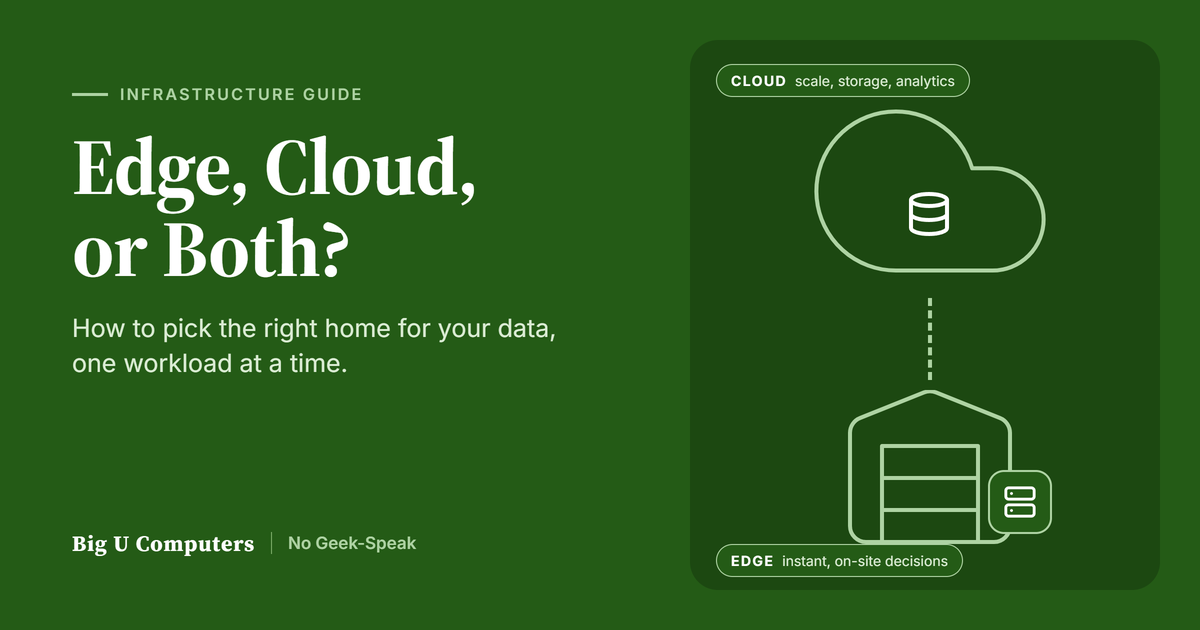
Edge infrastructure means computation and decisions happen close to where data is produced, like on-site devices or local servers, instead of far away. Many teams describe it as a decentralized computing infrastructure that runs workloads at the edge, while cloud infrastructure centralizes compute and storage in remote data centers you access over the network.
What changes day to day is the path your data takes. Local processing can cut wait time and bandwidth use, but it adds more locations to manage. Cloud can simplify scaling and backups, yet network latency and data transfer costs can shape real performance. Think of a retail store with cameras and sensors. Edge handles instant alerts in the building, while the cloud stores history and trains models over time.
Keep Hybrid Edge/Cloud Manageable With Ongoing IT Support
Once you understand what work belongs at the edge versus in the cloud, the next challenge is keeping whichever mix you choose running reliably day to day. In practice, managing edge, cloud, or hybrid infrastructure takes consistent time and specialized know-how, monitoring devices, staying on top of patches, tightening security, and planning refresh cycles, often more than small and mid-sized IT teams can realistically absorb while also supporting users and projects. That’s where managed IT services can make a hybrid approach feel less like “two environments to babysit” and more like a single, maintainable system. Big U Computers is one resource businesses turn to for managed IT services with 24/7 live local support, proactive cybersecurity and risk assessments, VoIP phone systems, and compliance expertise across frameworks like HIPAA, NIST, and PCI, helping organizations keep infrastructure secure and stable as they scale.
Edge vs. Cloud FAQs People Actually Ask
Q: What’s the simplest way to compare latency at the edge vs. in the cloud?
A: Edge usually wins when every millisecond matters, because processing happens close to the device or user. Cloud latency can be perfectly fine for reporting, backups, and batch analytics. If you’re unsure, list the workflows that feel “laggy” today and test them with a small edge pilot.
Q: How do I know if I need cloud scalability or just better on-site capacity?
A: Cloud is great when demand spikes unpredictably, like seasonal traffic or rapid growth. The clue is how often you buy hardware “just in case” or scramble during peak periods. Since 90% of organizations use the cloud, you can often start small and scale only as usage proves it.
Q: Is cloud security automatically better than edge security?
A: Neither is automatically safer; security depends on configuration, patching, identity controls, and monitoring. Real risk exists in both places, and 45% of data breaches are cloud-based shows why strong access rules and logging matter. A smart next step is defining who can access what data, from which devices, and why.
Q: What costs should I compare beyond the monthly cloud bill?
A: Include bandwidth, support time, compliance needs, and outage impact, not just subscription fees. Edge has upfront hardware and refresh cycles, while cloud can add variable usage charges and egress fees. Build a simple cost table for one workload over 12 to 24 months.
Q: When does a hybrid edge-cloud setup make the most sense?
A: Hybrid fits common real-world needs: edge for real-time decisions and resilience, cloud for storage, analytics, and collaboration. If you have multiple sites, IoT devices, or intermittent connectivity, hybrid often reduces headaches. Start by splitting one workflow into “must be instant” and “can be centralized.”
Choosing Edge, Cloud, or Hybrid for Workloads That Matter
Modern data teams keep running into the same pull: chase low latency at the edge, chase scale in the cloud, and still keep costs and risk in check. The most reliable mindset is a workload-driven infrastructure choice, matching each job to the environment that serves it best, and that’s why hybrid edge-cloud strategies show up so often in real deployments. Applied well, real-time application support gets snappier, IoT deployment models stay manageable, and distributed computing challenges stop feeling like constant tradeoffs. Pick infrastructure based on the workload, and the edge-versus-cloud debate mostly disappears.