November 3, 2026
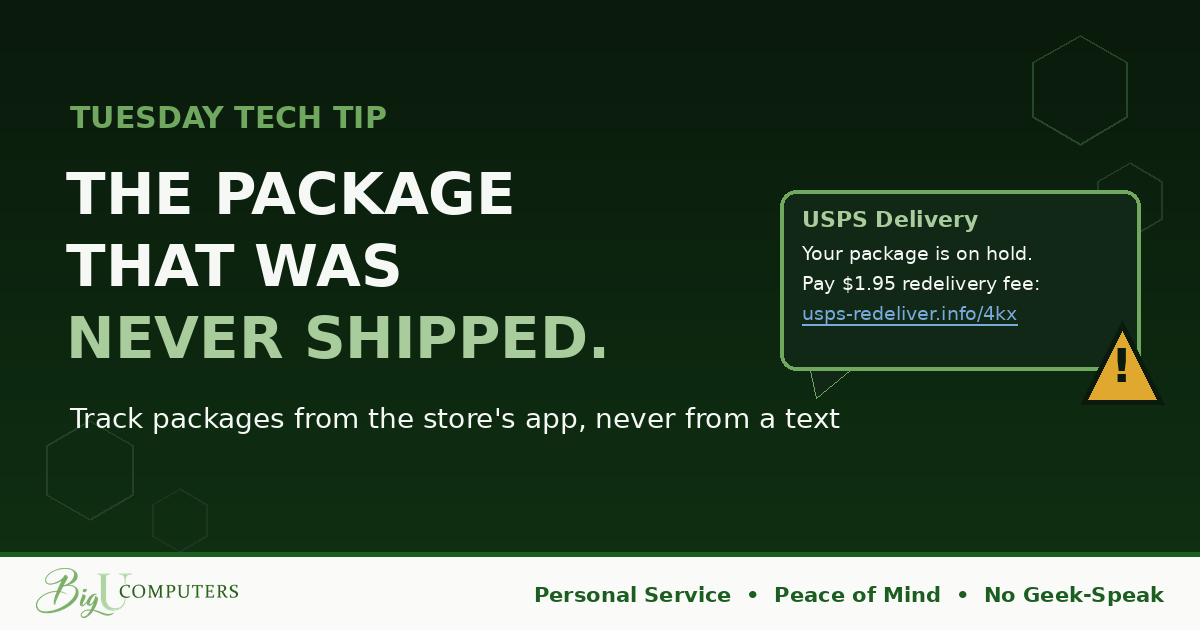
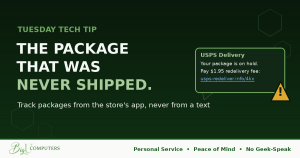
It's early November. You've ordered a few things. Maybe a lot of things. Your phone buzzes: "USPS: We were unable to deliver your package due to an incomplete address. Please confirm your details and pay a $1.95 redelivery fee within 24 hours."
There's a link. You're busy. You are, in fact, waiting on a package. So you tap.
That text was sent to a few hundred thousand phones at once. The scammer didn't know you had a package coming. They knew that in November, almost everyone does.
Why It Works So Well
Most scams have to convince you of something. This one doesn't. It just has to arrive during the two months a year when nearly every person in America is expecting a delivery. The message matches your life by accident, and the tiny fee makes it feel harmless. Who argues over $1.95?
But the fee was never the goal. The payment page is designed to collect your full card number, expiration, security code, and often your address and phone. That's everything needed to drain the card, and it gets sold within hours.
The Four Tells
- A carrier asking for money by text. The postal service, UPS, FedEx, and Amazon do not text you to collect fees. Ever. If there's a real customs charge or address problem, it shows up in your account on their real site, not in a text.
- A link that isn't the carrier. usps-redeliver.info, ups-tracking-help.com, fedex.delivery-fix.net. Remember the hover check and the QR rule: read the address. The real ones are usps.com, ups.com, fedex.com, and nothing else.
- A message about a package you can't identify. No order number you recognize, no store name, just "your package." Real notifications tell you what's coming and from where.
- Urgency and a tiny fee. "Within 24 hours" and "$1.95" are chosen precisely to make you act fast without thinking hard.
The Habit
Never track a package from a link in a text or email. That's the whole rule.
If you want to check on an order, open the app or website of the store where you bought it, or type the carrier's real address into your browser. Your orders and any genuine delivery problems will be right there. If the text was real, you'll see the issue. If it wasn't, you'll see nothing, and you just avoided the trap without needing to figure out whether it was real.
The Same Reflex Beats the Whole Family of Scams
This trick has a lot of cousins, and they all use the same script with a different costume: "your bank account is locked," "your unpaid toll needs attention," "your Netflix payment failed," "your Amazon account will be suspended." Every one of them wants you to tap a link and type something valuable.
Same answer every time: go to the real site yourself. Open the app you already have. Type the address you already know. Nobody has ever been scammed by opening their own banking app to check on a problem.
If You Already Paid the Fee
Call the number on the back of your card and tell them you entered your card into a scam site. They'll replace the card, and if you act quickly they can usually stop charges before they post. If you used a debit card, do this immediately, since debit protections are weaker and money leaves your account directly. If it was a company card, tell your manager and IT the same day. And if you typed a password anywhere on that page, change it now.
Owners: The Phone Is the New Front Door
Every one of these texts lands on the same phone that holds your team's work email, their authentication app, and possibly saved company logins. A scam that starts with a fake delivery fee can end with a compromised work account. Good security awareness training covers what happens outside the office too, because that's where most of it starts.
Want to see what that training looks like for a team your size? Book 20 minutes with me here. No Geek-Speak, no pressure.
Big U Computers, LLC. Personal Service, Peace of Mind, No Geek-Speak, and We Won't Hold You Hostage. That's the promise.