September 29, 2026
It's 2:30 on a Thursday. You've been in the weeds all day. An email lands that looks like a shared document from someone you work with. You click, a login page appears, you type your password, and nothing happens. Weird. You close it and get back to work.
Right there, in that moment, the most important security decision of the year gets made. Not the click. What you do next.
The Click Is Not the Disaster
For two months we've been teaching your team how not to click, approve, scan, or call. That training matters. It stops most attacks. But no training stops all of them, because the people sending these are professionals, and your team members are human beings having ordinary days.
So here's the reframe: a bad click is a normal event. It happens at every company. What separates a company that shrugs it off from one that ends up on the news is speed.
What 60 Seconds Buys You
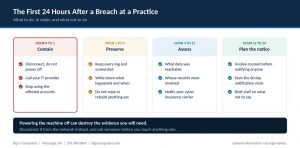
When a click is reported immediately, the fix is usually boring: someone in IT resets your password, blocks the link for everyone else, checks your computer, and confirms nothing spread. Fifteen minutes. Maybe a mild inconvenience. Often you're back to work before the coffee cools.
When a click is hidden for a day, the same click has time to grow up. The stolen password gets used to read your email. Your inbox gets searched for invoices and vendor contacts. Rules get set to hide the criminal's activity. More phishing goes out under your name. Files get encrypted. By the time it's obvious, the cleanup is measured in weeks and the cost in tens of thousands.
Criminals depend on the gap between the click and the report. Your silence is their runway.
Why People Stay Quiet (And Why It's Wrong)
- "Maybe nothing happened." You can't tell from the outside. Neither can anyone else without looking. The only way to know is to report.
- "I'll fix it myself." Changing your password is good, but you can't see what else was touched, and half-fixes can hide evidence IT needs.
- "It's embarrassing." Understandable, and completely backwards. In a healthy company, the person who reports fast is the hero of the story, not the villain.
- "I'll mention it later." Later is the whole problem. Sixty seconds and six hours are different universes.
The Rule and the Script
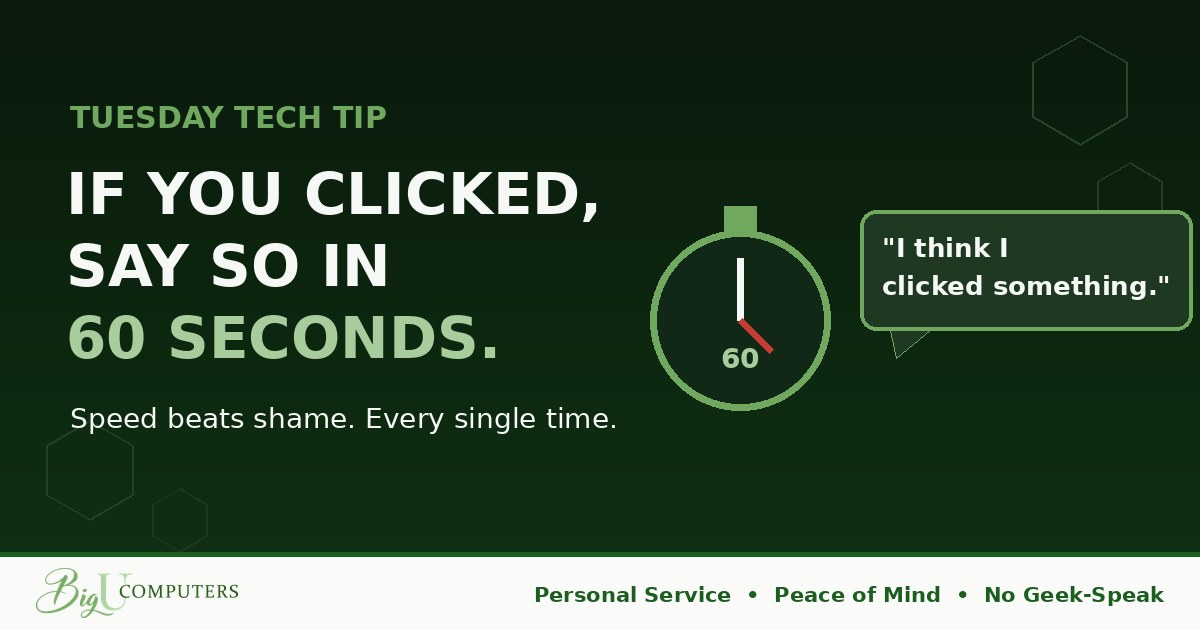
If you clicked a link and something felt off, typed a password into an unfamiliar page, approved a sign-in prompt you shouldn't have, read a code to a caller, scanned a code that went somewhere strange, or just have a bad feeling: tell IT right away. Don't investigate, don't wait, don't tidy up first.
Here's the whole script: "I think I clicked something I shouldn't have. Here's what it was, here's what I did, here's when." That's it. You don't need to know what happened. You just need to say what you did.
What Happens After You Report
Nothing scary. Someone will ask a few questions, reset a password, and probably look at your computer for a few minutes. You'll be back to work quickly. What you won't experience: a lecture, a write-up, or a reputation. A team that reports fast is the single best security control any business can have, and good IT people know it.
Owners and Managers: Say It Out Loud
Your team will only report fast if they believe it's safe to. That belief comes from you. At your next staff meeting, say this in plain words: "If you click something bad, tell us immediately. Nobody gets in trouble for reporting. The only mistake is staying quiet." Then live up to it the first time someone does.
This is what Personal Service means to us: not just fixing computers, but building a place where the people using them feel safe raising their hand.
Next Month: Cybersecurity Awareness Month
October is national Cybersecurity Awareness Month, and we're running a four-week series your entire team can follow, one simple habit per week. If you want to kick it off by finding out how your team would actually do against a realistic phishing email, we run friendly simulations that show you exactly where practice is needed, with zero shaming.
Book 20 minutes with me here and let's start October ready. No Geek-Speak, no pressure, just Peace of Mind.
Big U Computers, LLC. Personal Service, Peace of Mind, No Geek-Speak, and We Won't Hold You Hostage. That's the promise.